t
e
k
n
i
k
k
a
p
ı


Fire Door Inspection Checklist: A Comprehensive Guide.
Fire doors are essential elements of a building's passive fire protection system. They help restrict the spread of fire and smoke and protect escape routes, but they must be inspected regularly to remain effective. The following fire door checklist provides a structured guide for routine inspection.
Why Fire Door Inspections Matter
- Reliability: Regular checks help confirm that the door can close and operate correctly in an emergency.
- Compliance: Inspections support fire safety management and should reflect applicable regulations, standards and manufacturer instructions.
- Early Fault Detection: Identifying damage or wear early allows corrective work to be completed before performance is compromised.
- Cost Control: Preventive inspection can reduce the likelihood of major repairs or replacement.
Fire Door Inspection Checklist
1. Overall Condition
- Is there any damage, distortion, cracking, corrosion or unauthorised alteration?
- Are the clearances between the leaf and frame even and within the permitted limits?
- Are the door and surrounding area clean and unobstructed?
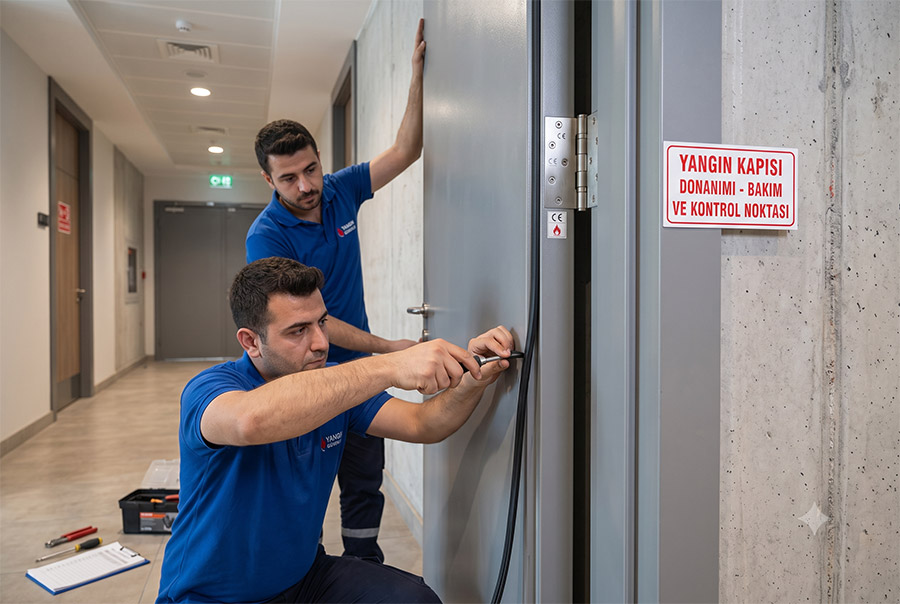
2. Hinges, Locks and Hardware
- Are the hinges secure, undamaged and correctly maintained?
- Do the lock and latch operate correctly?
- Are handles and other hardware secure?
3. Seal Condition
- Are intumescent and smoke seals present, continuous and undamaged?
- Are the seals the correct type and size for the doorset?
4. Self-Closing Operation
- Does the door close without assistance?
- Is the closing speed appropriate and controlled?
- Does the leaf close fully and engage the latch?
5. Fire Door Identification
- Is the label or identification plate present and legible?
- Does the information correspond with the required doorset and rating?
6. Opening and Closing
- Does the door open and close freely?
- Does it bind, drag or strike the frame, threshold or floor?
7. Smoke-Control Details
- Are smoke seals and threshold details intact where smoke control is required?
- Are there excessive gaps around the leaf?
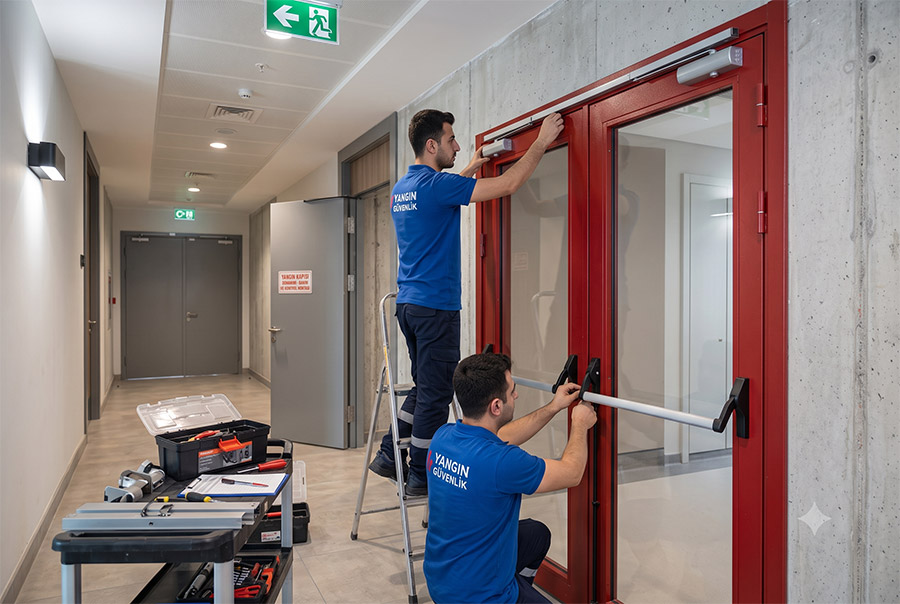
8. Panic Bar or Emergency Exit Device, If Fitted
- Does the device release and reset correctly?
- Can the door be opened easily in the direction of escape?
9. Accessories, If Fitted
- Does the door closer operate correctly?
- Does the approved electromagnetic hold-open device release correctly?
- Is its connection to the fire alarm or detection system functioning as intended?
Inspection Frequency
Frequency should reflect the building's risk assessment, door use, location and applicable requirements. A typical programme may include routine visual checks, monthly operational checks and periodic comprehensive inspections by a competent person. High-traffic or high-risk doors may require more frequent attention.
Inspection Records
Keep a record of the inspection date, door identification, checks performed, defects found, corrective actions and responsible person. Records may be required during fire safety audits and help demonstrate ongoing management.
Conclusion
Regular inspection is vital to fire door performance. Use this checklist to monitor each doorset and arrange prompt repairs whenever a defect is identified. Repairs that may affect certified performance should be completed by competent specialists using compatible components.
Fire Door Prices in 2026: What Determines the Cost?
July 6, 2026