t
e
k
n
i
k
k
a
p
ı


Essential Fire Door Maintenance Tips.
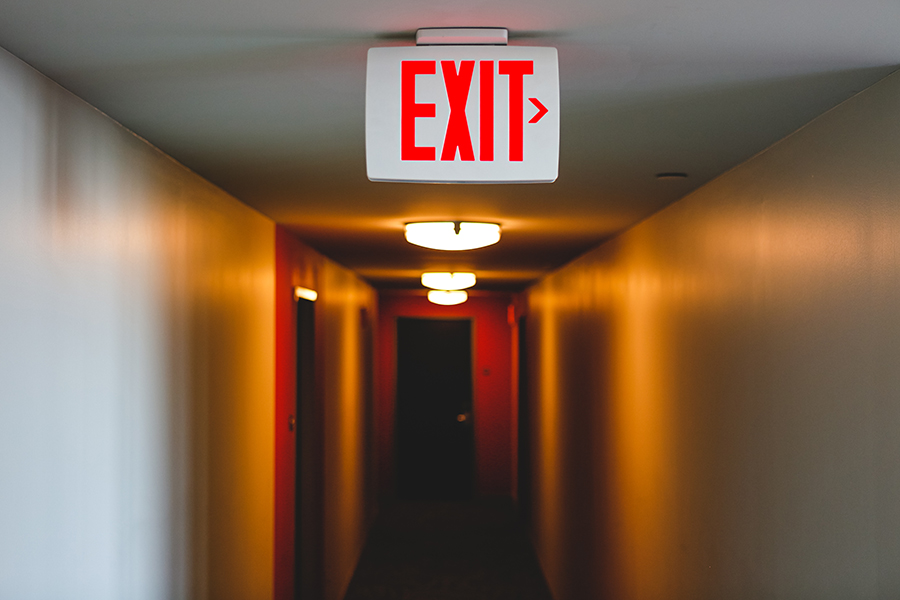
Fire doors are a critical part of a building's passive fire protection system. They help limit the spread of fire and smoke and support safe evacuation. To remain effective, they require regular inspection and maintenance. This guide highlights the most important fire door maintenance checks.
Why Fire Door Maintenance Matters
- Reliability: A properly maintained doorset is more likely to close and operate correctly during an emergency.
- Service Life: Routine care reduces wear, prevents minor defects from becoming serious and can extend the life of the door.
- Compliance: Inspection and maintenance should follow applicable regulations, standards, manufacturer guidance and the building's fire safety procedures.
- Cost Control: Early detection of damage can reduce the risk of expensive repairs or complete replacement.
Key Fire Door Maintenance Checks
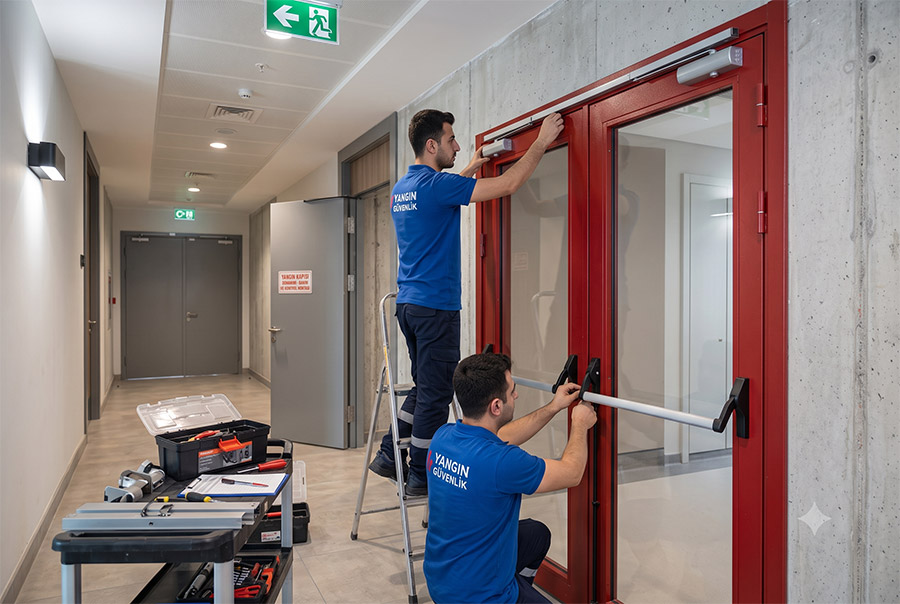
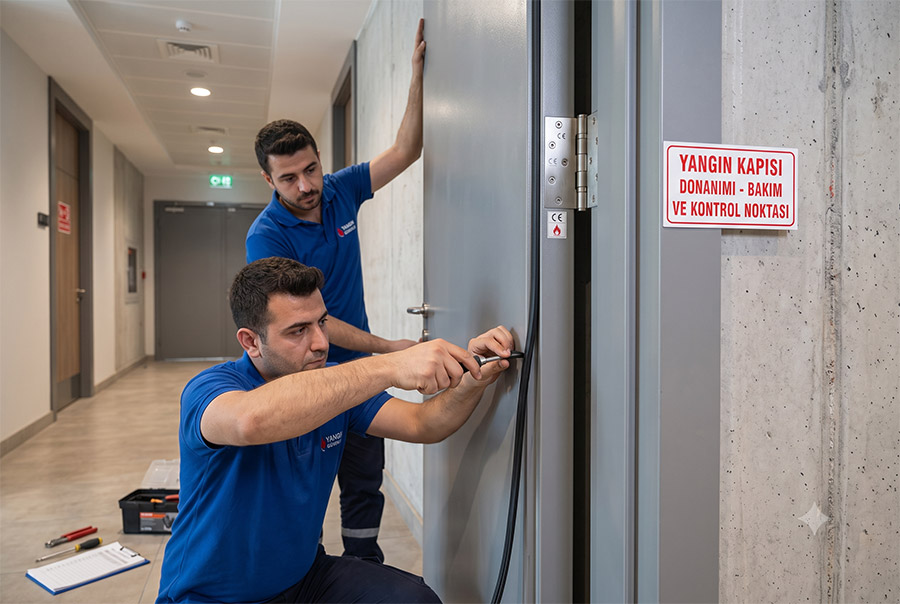
- Visual Condition: Look for damage, distortion, cracks, corrosion, holes or unauthorised modifications. Check that the frame, hinges, lock, latch, closer and hardware remain secure.
- Cleaning: Remove dust, dirt and debris from the leaf, frame, threshold, seals and moving parts using methods approved by the manufacturer.
- Hinges and Locks: Check fixings, wear and operation. Lubricate only where recommended and replace defective components with compatible approved parts.
- Intumescent and Smoke Seals: Check that seals are present, continuous and undamaged. Replace loose, painted, worn or missing sections with the correct specification.
- Self-Closing Operation: Test the door from different opening angles. It should close completely and engage the latch without assistance.
- Door Label: Confirm that the identification label or plate is present, legible and has not been painted over or removed.
- Maintenance Records: Record the date, door reference, checks completed, defects found, corrective action and responsible person.
- Professional Support: Use competent fire door specialists for adjustments, significant repairs and component replacement.
Suggested Maintenance Frequency
Inspection frequency depends on risk, door location, traffic levels, building use and regulatory requirements. A practical programme may include:
- Daily or Routine: Check that the door is unobstructed, undamaged and not wedged open.
- Weekly: Perform a general visual and operational check in higher-use areas.
- Monthly: Check hinges, locks, panic hardware, seals and self-closing operation.
- Periodic Comprehensive Inspection: Arrange a documented inspection by a competent person at intervals appropriate to the building's risk assessment and applicable requirements.
Conclusion
Regular fire door maintenance is essential to building safety. By checking the leaf, frame, hardware, seals and closing action—and recording any corrective work—you can help ensure that each door remains ready for an emergency. Seek specialist support whenever a defect may affect certified performance.
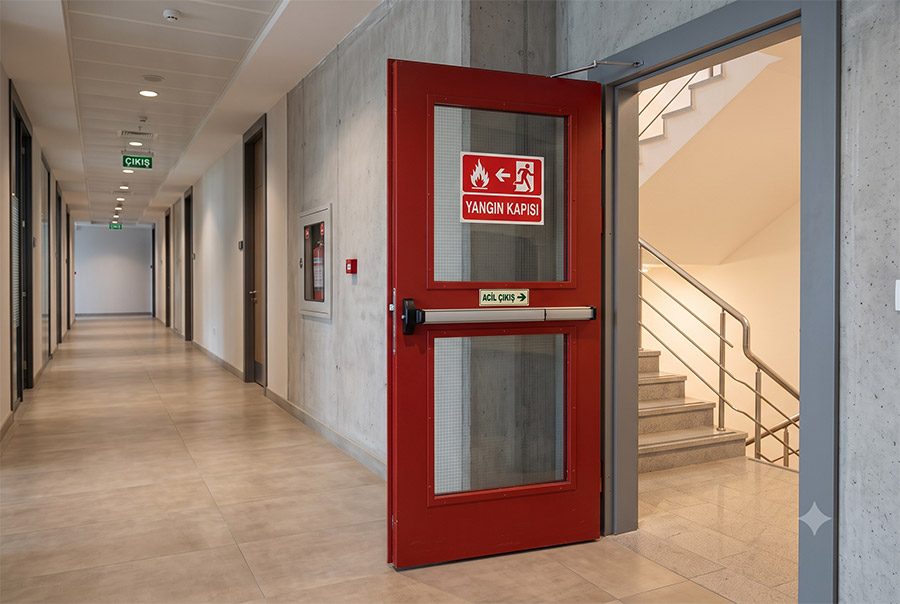
Fire Door Prices in 2026: What Determines the Cost?
July 6, 2026