t
e
k
n
i
k
k
a
p
ı


How to Inspect and Maintain a Fire Door.

Fire doors are a vital part of a building's passive fire protection system. They help limit the spread of fire and smoke and support safe evacuation. To perform as intended, however, every fire doorset must be inspected and maintained regularly. This guide explains the main fire door maintenance and inspection steps.
Why Fire Doors Matter
Fire doors are designed to maintain compartmentation and protect escape routes for a declared period. They can slow the movement of flames, hot gases and—where the correct smoke-control classification applies—smoke. For these reasons, doors must remain unobstructed, undamaged and ready to close fully at all times.
Fire Door Maintenance
The maintenance programme depends on the doorset, frequency of use, risk level and environmental conditions. Typical maintenance activities include:
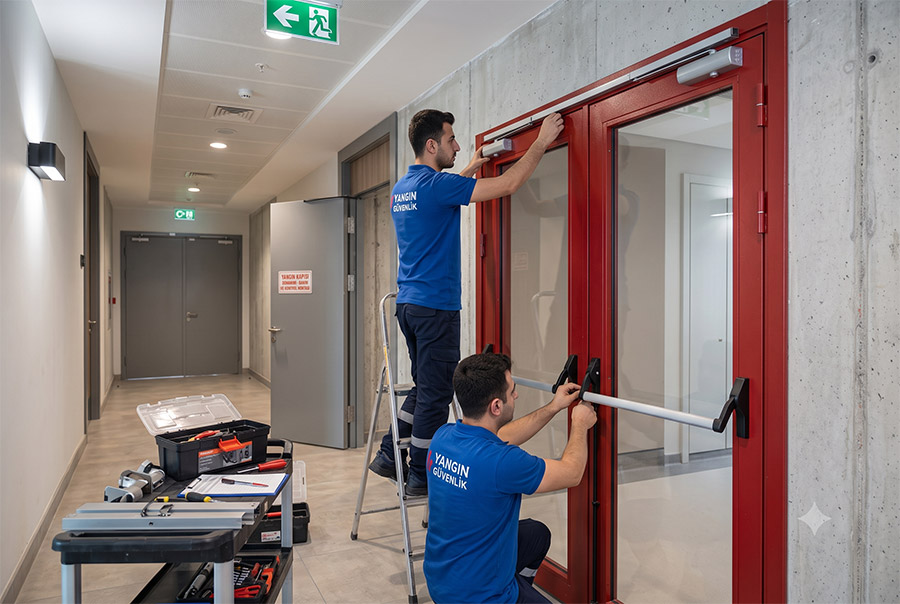
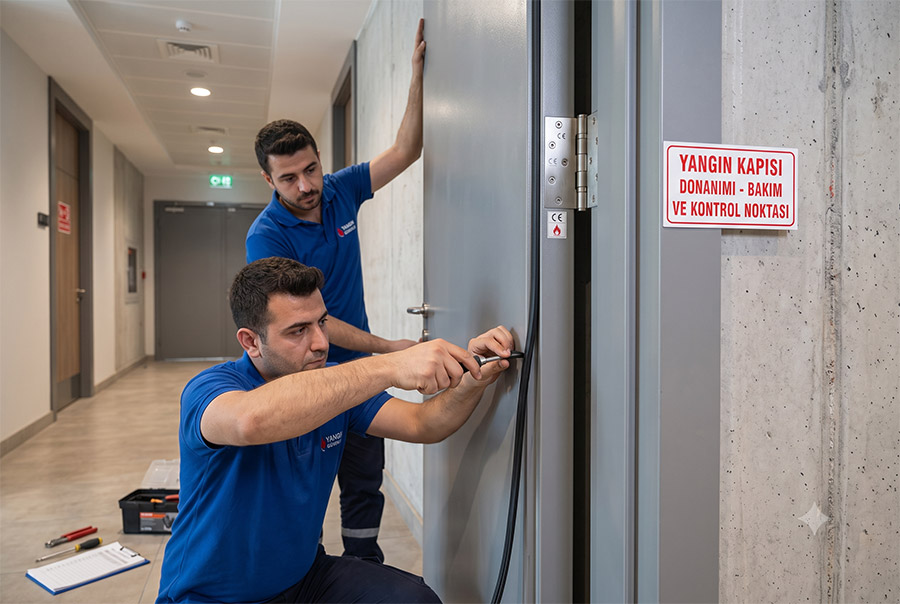
- Visual Inspection: Check regularly for damage, distortion, cracks, corrosion or unauthorised alterations. Confirm that hinges, locks, latches, closers and other components are secure.
- Cleaning: Keep the door leaf, frame, seals and hardware clean. Dust, dirt or debris can interfere with closing and latching. Use cleaning methods compatible with the manufacturer's instructions.
- Hinge and Lock Inspection: Check hinges, locks, latches and panic hardware for wear and correct operation. Lubricate only where recommended, using a suitable product. Replace damaged components with compatible approved parts.
- Seal Inspection: Examine intumescent and smoke seals for damage, missing sections, paint contamination or detachment. Replace worn seals with the correct type and size specified for the doorset.
- Self-Closing Test: Release the door from different opening positions and confirm that it closes completely and engages the latch without assistance. Adjust or repair the closer or spring hinge where necessary.
Fire Door Inspection
Inspection confirms whether the door remains functional and consistent with its required configuration. Key checks include:
- Opening and Closing: Confirm that the door moves freely without binding, dragging or striking the frame or floor.
- Lock and Latch: Verify that the locking and latching mechanisms operate correctly and that the latch engages securely when the door closes.
- Seals: Confirm that seals are intact, continuous and correctly positioned.
- Self-Closing Operation: Make sure the door closes fully from any required opening angle and is not held open by an unauthorised device.
- Identification Label: Check that the fire door label or identification plate remains present, legible and consistent with the required rating and doorset information.
Maintenance and Inspection Records
Record each inspection and maintenance visit, including the date, door identification, checks completed, defects found, corrective action and the person responsible. These records provide evidence of ongoing management and may be requested during fire safety audits.
Conclusion
Routine fire door inspection and maintenance help ensure that doors remain ready to perform during an emergency. Because requirements vary by building and doorset, significant repairs or component replacements should be handled by competent fire door professionals.
Fire Door Prices in 2026: What Determines the Cost?
July 6, 2026